Sound words, also known as onomatopoeia, can make a poem or piece of writing appeal to the sense of hearing. Words like bam, whoosh or slap sound just like the thing they refer to. Take a look at five categories of onomatopoeic examples, grouped by letter combinations that are commonly used to represent certain sounds.
What Is Onomatopoeia?
The word onomatopoeia comes from the combination of two Greek words, onoma meaning "name" and poiein meaning "to make," so onomatopoeia literally means "to make a name (or sound)." That is to say that the word means nothing more than the sound it makes. The word boing, for example, is simply a sound effect, but one that is very useful in making writing or storytelling more expressive and vivid.
Many onomatopoeic words can be verbs as well as nouns. Slap, for instance, is not only the sound that is made by skin hitting skin but also the action of hitting someone (usually on the face) with an open hand. Rustle is the sound of something dry, like paper, brushing together, but it can also indicate the action of someone moving papers around and causing them to brush together, thus making this noise.
Common Onomatopoeia Words & Letter Combinations
Many times, you can tell what an onomatopoeic word is describing based on letter combinations contained within the word. These combinations usually come at the beginning, but a few also come at the end. The following examples have been grouped according to how they are used.
Water Onomatopoeia Examples
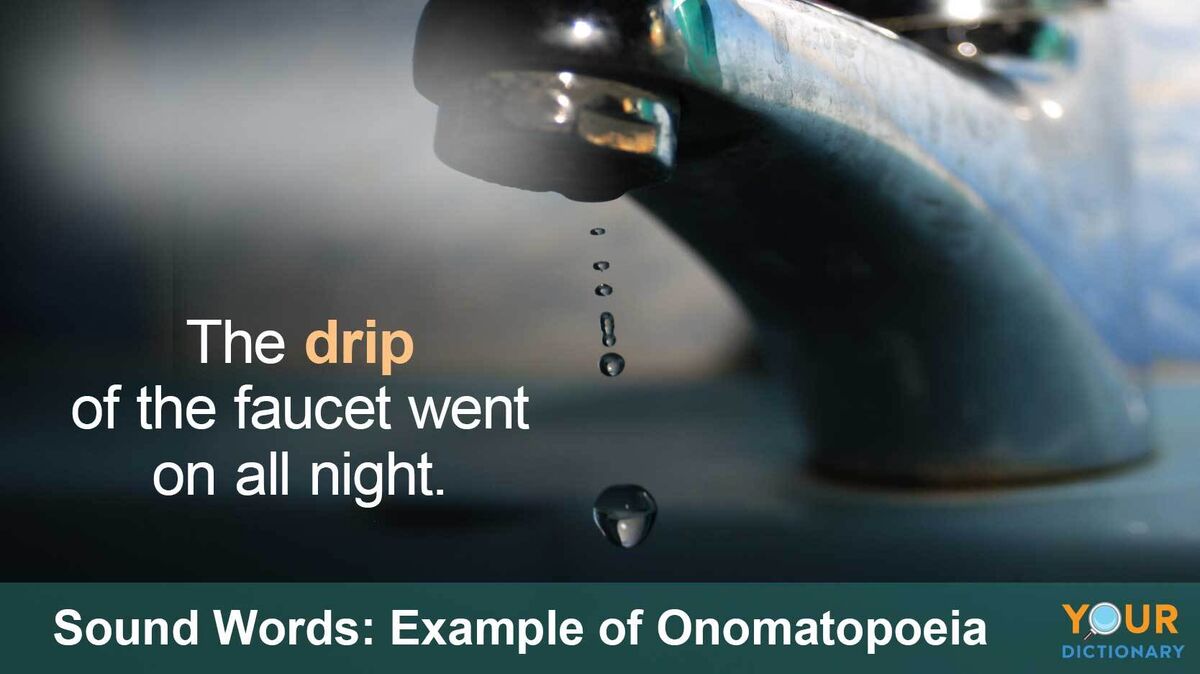
Words related to water or other liquids often begin with sp- or dr-. Words that indicate a small amount of liquid often end in -le ( such as in sprinkle or drizzle). Water onomatopoeia examples include:
- bloop
- dribble
- drip
- drizzle
- splash
- spray
- sprinkle
- squirt
A poem by Australian poet Lee Emmett illustrates many onomatopoeia words related to water:
"water plops into pond
splish-splash downhill
warbling magpies in tree
trilling, melodic thrill
whoosh, passing breeze
flags flutter and flap
frog croaks, bird whistles
babbling bubbles from tap"
Vocal Onomatopoeia Examples
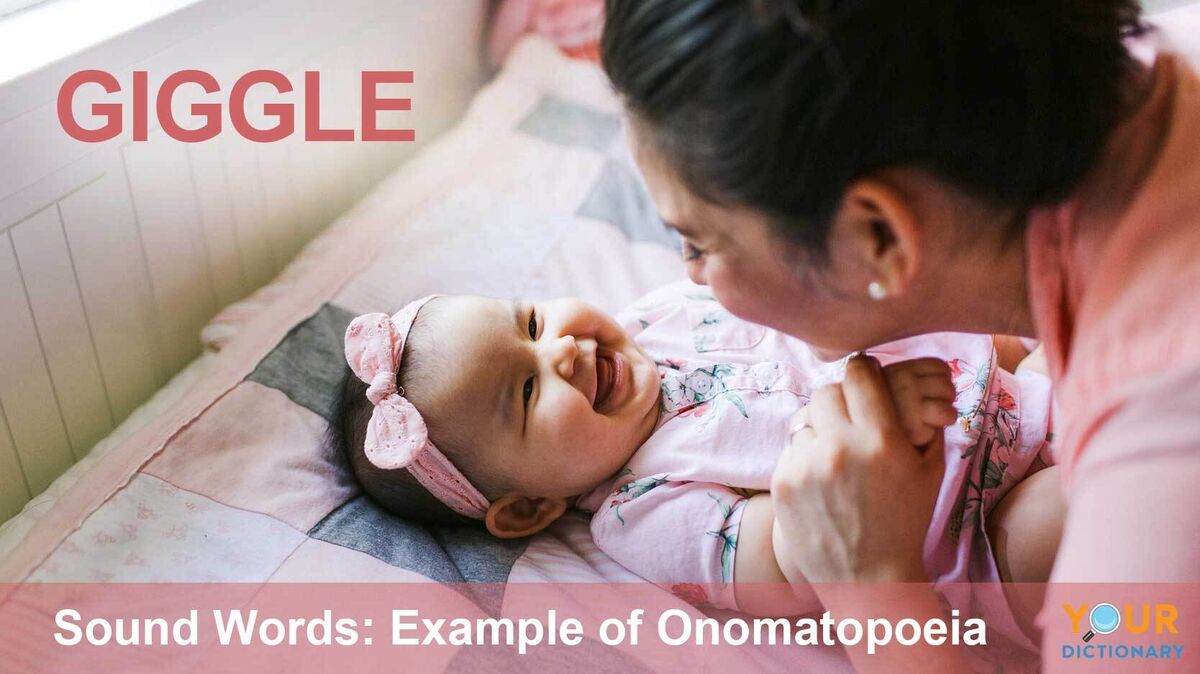
Onomatopoeia words are great ways to describe how a person sounds when they talk. Sounds that come from the back of the throat tend to start with a gr- sound, while sounds that come out of the mouth, through the lips, tongue and teeth, often begin with mu-. Examples of vocal onomatopoeia sounds include:
- ahem
- belch
- blurt
- chatter
- giggle
- growl
- groan
- grunt
- gulp
- gurgle
- eek
- moan
- mumble
- murmur
- squeal
- whimper
Collisions can occur between two or more objects. Sounds that begin with cl- usually indicate collisions between metal or glass objects, and words that end in -ng are sounds that resonate. Words that begin with th- usually describe dull sounds such as soft but heavy things hitting wood or earth. Examples of these sound words include:
- bam
- bang
- clang
- clank
- clap
- clatter
- click
- clink
- crash
- crunch
- ding
- jingle
- knock
- screech
- slap
- smash
- thud
- thump
Air Onomatopoeia Examples
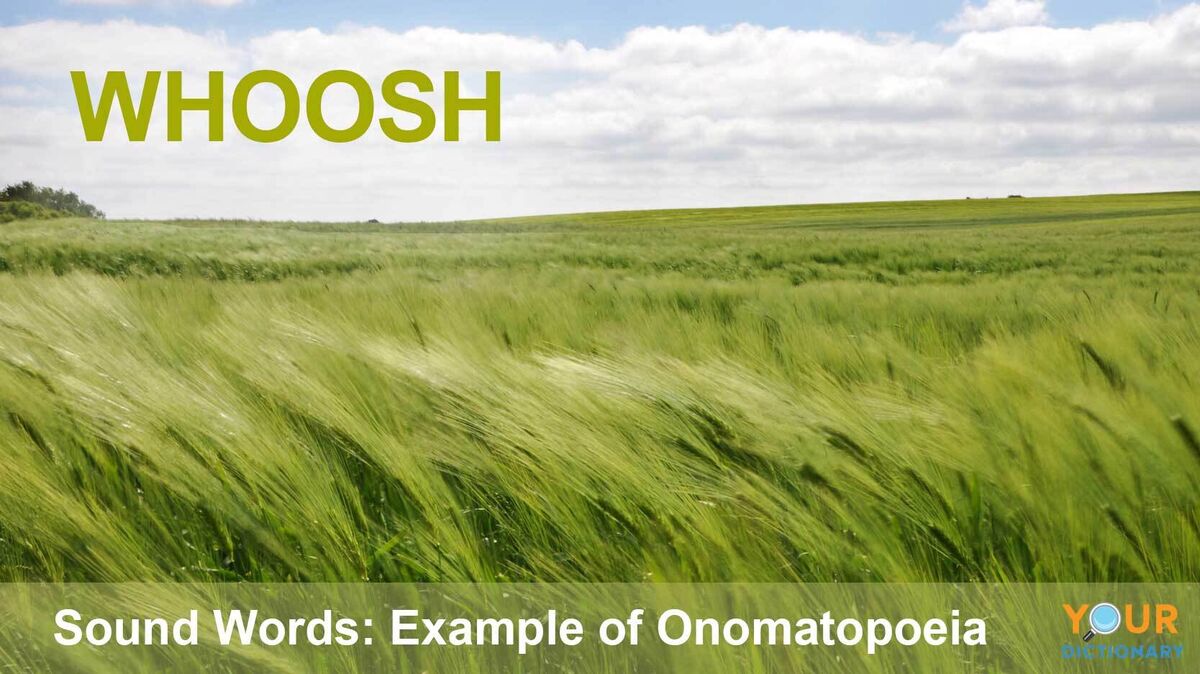
These words describe the sounds of air blowing through things or of things rushing through the air. Words related to air often start with wh-, include a "w", or end with -sh. Examples of air onomatopoeia sounds are:
- flutter
- fisst
- fwoosh
- gasp
- swish
- swoosh
- waft
- whiff
- whoosh
- whizz
- whip
Animal Onomatopoeia Examples
Words related to animal noises often have long vowel sounds, such as "oo" or "ay." If you’ve spent time in other countries, you may know that animals speak different languages too. Depending on where a chicken is from, for example, she might cluck-cluck, bok-bok, tok-tok, kot-kot, or cotcotcodet. English onomatopoeia words for animals noises are:
- arf
- bark
- bray
- buzz
- cheep
- chirp
- chortle
- cluck
- cock-a-doodle-doo
- cuckoo
- hiss
- honk
- howl
- purr
- ribbit
- tweet
- warble
Onomatopoeia in Action
Onomatopoeia is a fun, linguistic tool used in literature, songs and advertisements. Now that you've seen examples of the individual words, consider the following examples of onomatopoeia words in use.
- "Chug, chug, chug. Puff, puff, puff. Ding-dong, ding-dong. The little train rumbled over the tracks." - The Little Engine That Could by Watty Piper
- "Plop, plop, fizz, fizz, oh what a relief it is." - slogan of Alka Seltzer, U.S.
- "Little Sal picked three berries and dropped them in her little tin pail ... kuplink, kuplank, kuplunk!" - Blueberries for Sal by Robert McCloskey
Take a look at the different onomatopoeia examples in Todd Rundgren's song, appropriately named Onomatopoeia.
"Onomatopoeia every time I see ya
My senses tell me hubba
And I just can't disagree.
I get a feeling in my heart that I can't describe. . .
It's sort of whack, whir, wheeze, whine
Sputter, splat, squirt, scrape
Clink, clank, clunk, clatter
Crash, bang, beep, buzz
Ring, rip, roar, retch
Twang, toot, tinkle, thud
Pop, plop, plunk, pow
Snort, snuck, sniff, smack
Screech, splash, squish, squeak
Jingle, rattle, squeal, boing
Honk, hoot, hack, belch."
Bringing Language to Life
Onomatopoeic words bring language alive in the reader's imagination by capturing a sound. Reviewing examples of onomatopoeia words and their various sound categories is an excellent way to learn to recognize and understand the concept. For more onomatopoeia practice, take a look at these examples of onomatopoeia in nature.