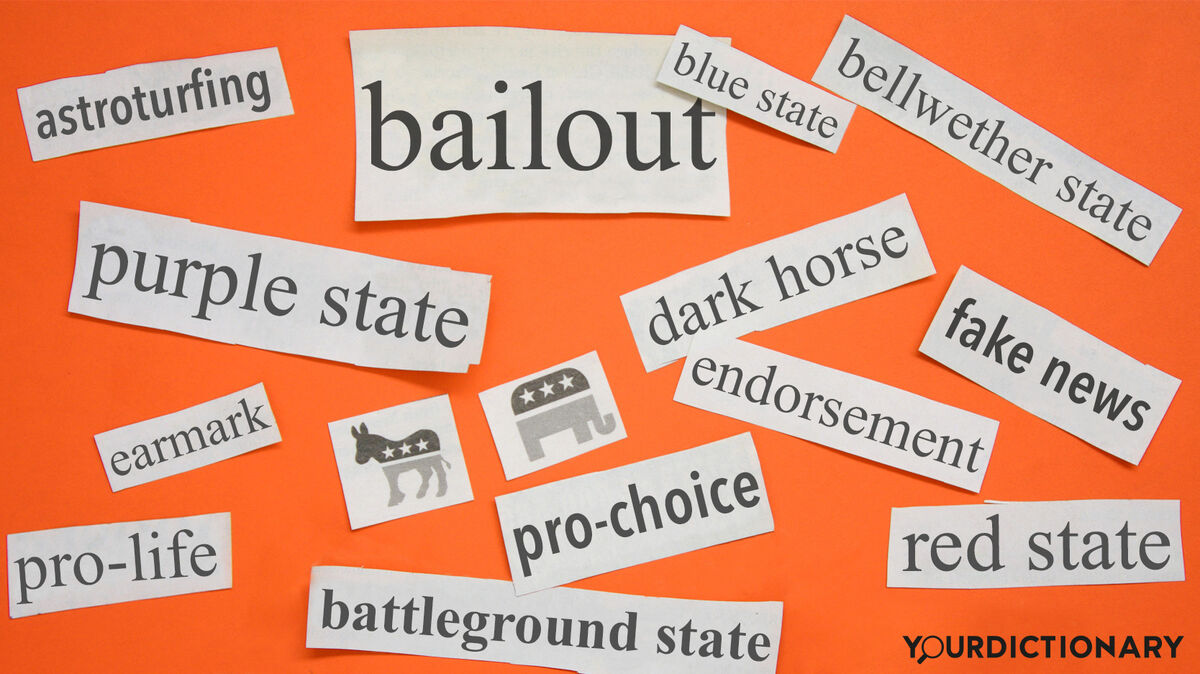
Political jargon refers to the words and phrases used by politicians, lobbyists, the media, and other people to talk about political issues quickly. Political jargon is the shared language of catchphrases and political buzzwords spoken by those in the political sphere. Begin your journey into understanding politics with some must-know examples of political words and phrases.
Election Jargon
Whenever election season rolls around, you are likely to hear these terms thrown around, but what do they mean?
astroturfing - creating a false impression of organic support for or opposition to an organization, policy, individual or program
balancing the ticket - when a presidential candidate chooses a running mate whose qualities will appeal to more voters
battleground state - a state that has an equal chance of being won by a Democratic or Republican candidate
bellwether state - a state that typically votes for the leading candidate
blue state - a state that votes primarily for Democrats or liberals
coastal elites - typically wealthy, well-educated people from the northeastern or Californian coast of the U.S. that have left-leaning political views
coffers - the money in an organization’s or political party’s bank accounts available for spending
dark horse - an unknown or underestimated candidate that seems unlikely to succeed, but who goes on to succeed
dark money - political funds or donations raised by nonprofit organizations where the donors are not disclosed
earmark - money set aside for a specific purpose or program
endorsement - public approval from one political entity or organization for another
inside the beltway - an idiom to classify issues that are significant to government officials rather than the general public; the “beltway” refers to Interstate 495 around Washington D.C.
political action committee (PAC) - political committees that receive financial contributions from corporations, individuals or organizations to support or oppose specific political campaigns or legislation
purple state - a state that has a similar amount of Republican and Democrat voters
red state - a state that votes primarily for Republicans or conservatives
stump speech - a prepared speech or pitch that explains their core platform
swing state - a state where both political parties have similar levels of support
war chest - funding set aside specifically to finance a war effort; funds earmarked for a particular purpose
wedge issue - a controversial political issue that divides members of opposing political parties or the same party
Socio-Political Jargon and Buzzwords
Whether you are watching the news or interacting on social media, you are likely to hear these terms at some point to refer to politicians, the political process or the news itself.
blue dog - a Democrat who is likely to side with Republicans on certain issues
bailout - helping a large company with its debts with the intention that the company will repay the money in the future
dog whistle - a suggestive buzzword or phrase that has an implied meaning for the target audience
fake news - information that is intentionally false or misleading; propaganda
flip flopper - a candidate or politician who changes his or her mind on certain important issues over time
greenwashing - when companies attempt to make themselves look environmentally friendly, regardless of whether or not they are, in actuality, environmentally friendly
grown in office - political term used for someone who won office based on one set of principles, but over time adopted an opposite set of principles
kool-aid-drinker - derogatory term for an individual who votes for a candidate or a party against their common sense
lame duck - a politician who is considered ineffective, either because he or she was recently elected out of office or announced retirement
malarkey - nonsense
pro-choice - a person who is in favor of a woman's right to choose abortion or not
pro-life - a person who opposes abortion
public servant - an elected official
reform - to change a law or a system to make it better or more efficient
RINO - short for "Republican in Name Only;" used to criticize Republicans who often side with Democrats
tree hugger - an environmentalist
Talk Like a Washington Insider
These are all examples of political slang terms or political speech commonly used by those on the "inside" of politics. So next time you watch the news or head to the voting booth, you can impress your friends with your knowledge of political jargon.
For more political terminology, you can learn more common political terms related to U.S. politics, voting and government. Teachers and parents can see how your kids can get up to date on current events and get involved with local or national issues to learn more.